




Using CHP to Understand Cardiac Fibrosis Pathology and Therapeutic Efficacy
Following a Myocardial Infarction (MI), the heart relies on myofibroblasts to deposit collagen, creating a vital "patch" to maintain structural integrity. However, when this process becomes chronic, excessive collagen deposition leads to cardiac fibrosis—a primary driver of heart failure. For researchers, the goal is to find therapies that limit this pathological remodeling without compromising...
View Details

Decellularization Induces Hierarchical Disorganization in Ligament Scaffolds
Ligament injuries, particularly those affecting the Anterior Cruciate Ligament (ACL) or Medial Collateral Ligament (MCL), present a significant orthopedic challenge due to the tissue's poor vascularization and limited regenerative capacity. Decellularized extracellular matrix (dECM) scaffolds have emerged as a promising solution, offering a natural framework that minimizes immune rejection while theoretically preserving the native...
View Details

Targeted Drug Delivery in Rheumatoid Arthritis: Leveraging Collagen Hybridizing Peptides for Enhanced Therapeutic Efficacy
Histological staining of mouse tibia-talus joints showing healthier articular cartilage due to iFab-CHP treatment compared PBS placebo. Rheumatoid arthritis (RA) is a chronic autoimmune disease which leads to the breakdown of the cartilage in the synovial joints. Current treatment strategies with tumor necrosis factor-alpha (TNFa) targeting neutralizing antibodies effectively reduce...
View Details
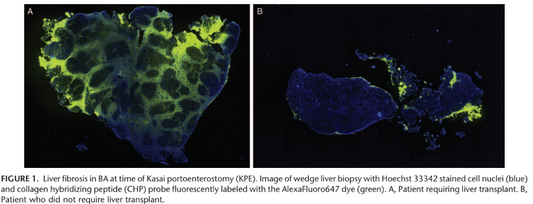
CHPs’ can Help Predict Liver Survival in Biliary Atresia
Biliary Atresia (BA) is a severe liver disease in infants, often leading to cirrhosis and death. Collagen Hybridizing Peptides (CHP) offer diagnostic and prognostic insights, aiding treatment decisions and organ transplant allocation.
View Details
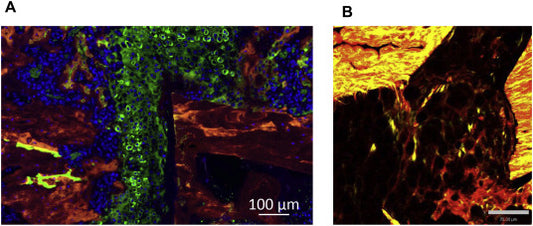
Delayed Fracture Healing in Obesity-associated Type 2 Diabetic Mouse Model
Explore more about the impact of obesity-related pre-diabetic hyperglycemia on bone healing using the DIO mouse model. CHPs help reveal that deficits in collagen microstructure leads to impaired fracture healing in obese subjects.
View Details
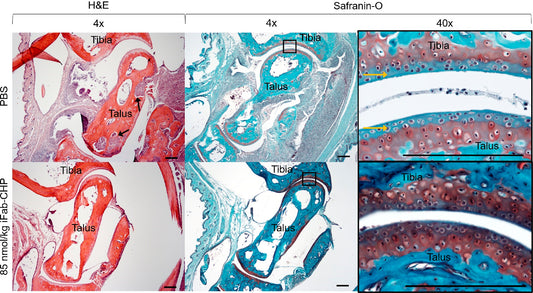
Localization of Therapeutic Fab-CHP Conjugates to Sites of Denatured Collagen for the Treatment of Rheumatoid Arthritis
In a recently accepted article published in Bioconjugate Chemistry, researchers from the University of Utah used CHPs in an antibody-conjugate to address Rheumatoid Arthritis(RA). In this paper, the authors used the Fab region from infliximab (an anti-TNFα therapy known as Remicade®) and conjugated this with CHPs. Figure Caption. A) Biodistribution of IR680 labeled bFab-(NIRF)CHP...
View Details
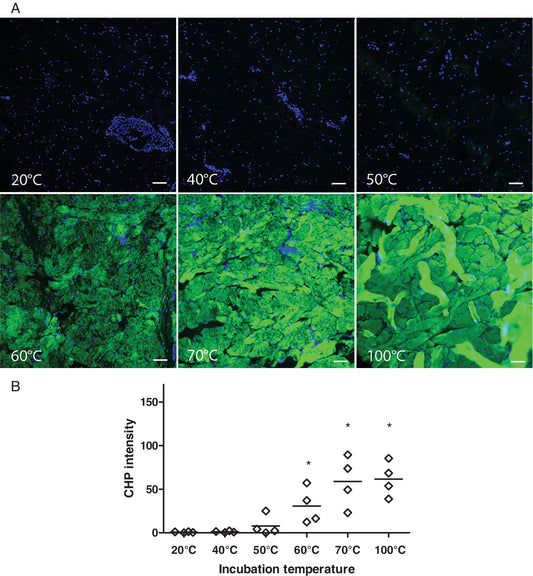
Effective enzymatic debridement of burn wounds depends on the denaturation status of collagen
Another great paper using CHPs! A recent article published in Wound Repair and Regeneration evaluated how the level of collagen denaturation within burned tissues influences the effectiveness of enzymatic debridement (removal of damaged tissue). They showed that low-temperature burns (<65 °C) had inadequate debridement, while high-temperature burns (>65 °C) had very effective debridement. By...
View Details
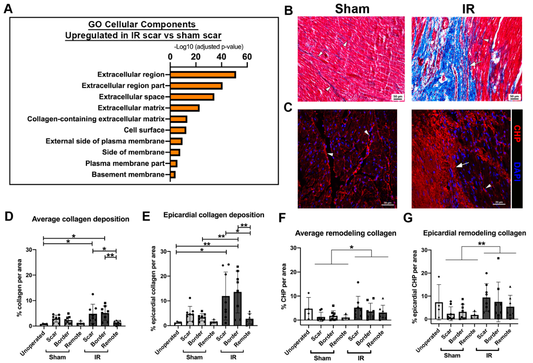
Scar Formation with Decreased Cardiac Function Following Ischemia/Reperfusion Injury in 1 Month Old Swine
Learn more about how by utilizing CHPs, researchers studied post-IR pig heart damage. They found initial function decline, stable conditions later, and identified scar formation, corroborating Masson's Trichrome staining. No cardiomyocyte renewal observed.
View Details