




CHPs enable precise detection of ECM depletion in solid tumors, offering researchers critical insights into how stromal-targeted therapies improve T cell infiltration and immunotherapy efficacy in PDAC.
While chimeric antigen T (CAR-T) cells have shown immense promise as a cancer therapeutic, they have limited efficacy in treating solid tumors. This is due to immune exclusion, whereby physical barriers such as stromal cells woven into dense extracellular matrices prevent anti-cancer immune cells from reaching the tumor.
View Details
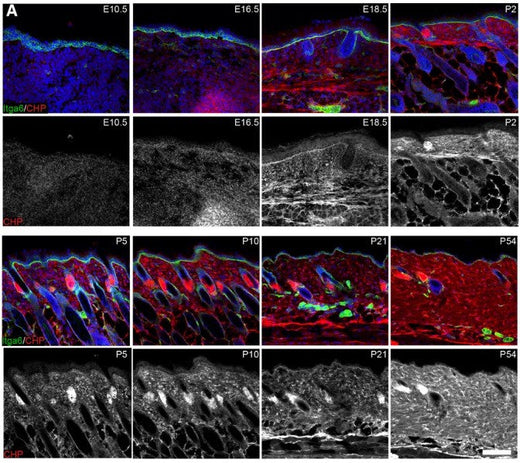
Can a Simple Feedback Loop Explain Skin Development and Repair?
Fibroblasts are central architects of our skin, coordinating tissue growth and ECM production. But how do these cells know when to stop growing and start building the structural framework of the skin? In a recent study, researchers discovered a negative feedback loop between fibroblast proliferation and ECM deposition. Using live imaging and Collagen Hybridizing...
View Details
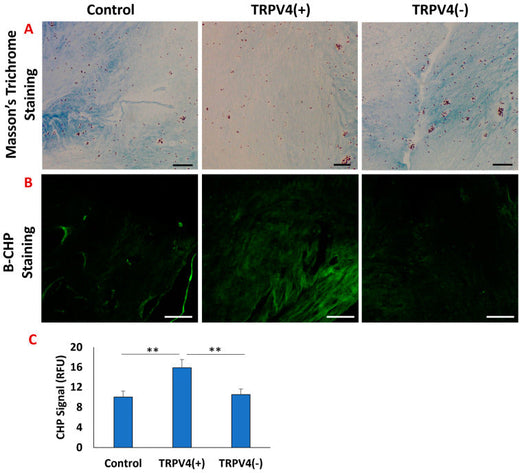
How can CHPs Improve Our Understanding of Inflammation?
Chronic inflammation can damage previously healthy tissues and organs, leading to a number of ailments including cardiovascular disease, rheumatoid arthritis, and lupus. Activation and deactivation of calcium-importing ion channel TRPV4 modulates inflammation through multiple mechanisms. Indeed, it has been shown that TRPV4 antagonists reduce production of pro-inflammatory cytokines, while TRPV4 activation shifts macrophages to...
View Details
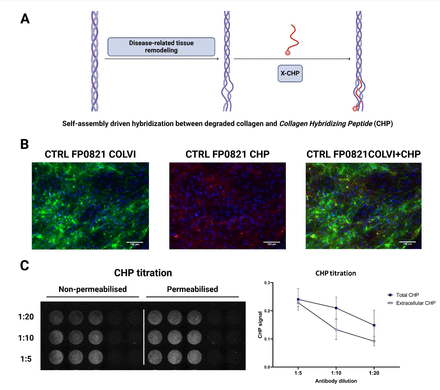
Unveiling Collagen Organization: The role of CHPs in understanding COL6-Related Dystrophies
Collagen VI-related dystrophies (COL6-RDs) are a group of genetic muscle disorders impacting both children and adults. These conditions can lead to delayed motor development, progressive muscle weakness, joint contractures, and respiratory complications. In severe cases, COL6-RDs result in the loss of independent mobility and a reliance on ventilatory support. Given the profound impact on...
View Details
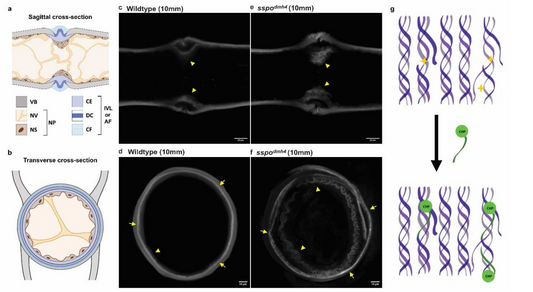
Insights into Collagen Damage and Spine Stiffness: Unraveling the Role of Oxidative stress in Scoliosis
Adolescent idiopathic scoliosis (AIS) is the most prevalent pediatric spine disorder, affecting 3-4% of children worldwide. It develops in the absence of obvious congenital or physiological defects. While some evidence suggests a genetic correlation, the underlying biological causes remain largely unknown. Without a comprehensive understanding of AIS at a biological or physiological level, treatments...
View Details
Understanding ECM Remodeling in Full-Thickness Skin Grafts: Insights from Collagen Hybridizing Peptide Staining
Full-thickness skin grafts (FTSGs) are commonly used in surgeries like hernia repairs, but how they integrate and heal long-term is still not fully understood. A recent study focused on extracellular matrix (ECM) remodeling and the role of fibroblasts in skin graft healing. Using collagen hybridizing peptide (CHP) staining, researchers observed active collagen turnover in...
View Details
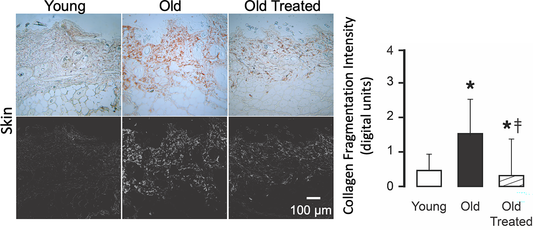
Aging Unveiled: CHPs Reveal Widespread Tissue Damage and Reversible Collagen Breakdown in Aged Mice
Staining of collagen in multiple organs with Biotin-conjugated Collagen Hybridizing Peptides (B-CHPs). The black and white panels are an extraction of the fluorescent peptide signal, used for quantification of collagen damage. The universal process of aging involves the dysregulation of a wide spectrum of biological mechanisms. Using mouse models, DeLano et....
View Details
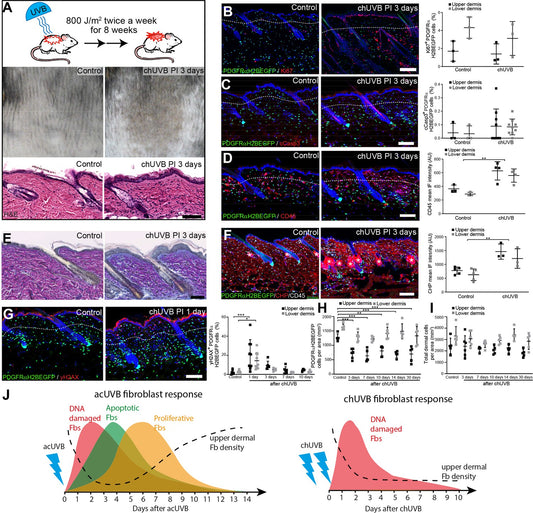
Understanding Collagen Hybridizing Peptides in Assessing Dermal Damage and Repair After UV Exposure
Exposure to ultraviolet radiation (UVR) occurs during prolonged exposure to sunlight and is associated with a variety of negative physiological effects, including skin damage, inflammation, and cancer. Many of these effects are due to the formation and accumulation of reactive oxygen species, which damage the extracellular matrix and impair cellular functioning. Fibroblasts are the...
View Details