




CHP Staining: Unlocking a New Therapeutic Strategy for Fibrosis
Fibrosis, the pathological accumulation of collagen and other ECM components, is a major health concern implicated in an estimated ⅓ of all natural deaths. While current anti-fibrotic drugs aim to slow progression, advanced fibrosis is often left untreated, leaving transplantation the only remaining option in many cases. A new therapeutic approach is focusing on...
View Details

Damaged collagen detected by collagen hybridizing peptide as efficient diagnosis marker for early hepatic fibrosis
Liver fibrosis, a significant pathological consequence of chronic liver disease and damage, is characterized by the excessive accumulation of extracellular matrix (ECM) proteins. This build up of non-functional scar tissue progressively replaces healthy tissue in the liver, leading to conditions such as cirrhosis, liver failure, and heightened risk of liver cancer. With a high...
View Details
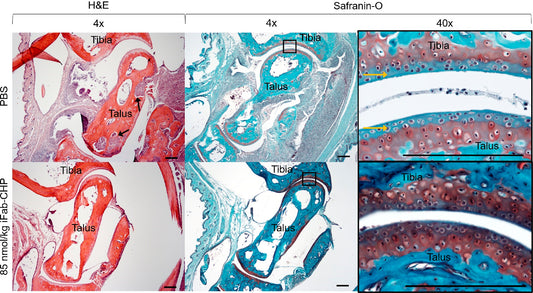
Localization of Therapeutic Fab-CHP Conjugates to Sites of Denatured Collagen for the Treatment of Rheumatoid Arthritis
In a recently accepted article published in Bioconjugate Chemistry, researchers from the University of Utah used CHPs in an antibody-conjugate to address Rheumatoid Arthritis(RA). In this paper, the authors used the Fab region from infliximab (an anti-TNFα therapy known as Remicade®) and conjugated this with CHPs. Figure Caption. A) Biodistribution of IR680 labeled bFab-(NIRF)CHP...
View Details
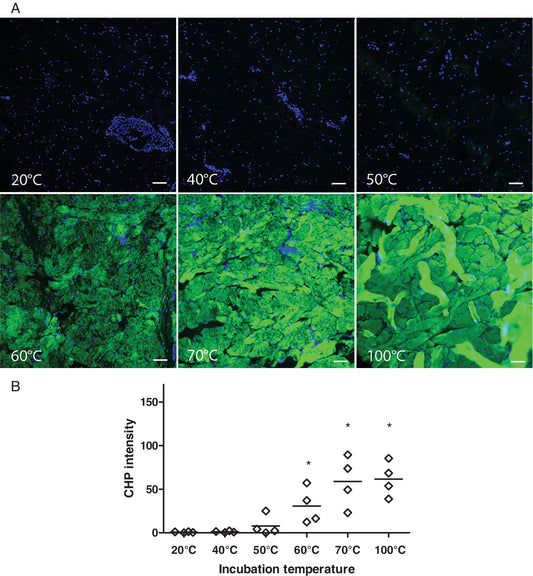
Effective enzymatic debridement of burn wounds depends on the denaturation status of collagen
Another great paper using CHPs! A recent article published in Wound Repair and Regeneration evaluated how the level of collagen denaturation within burned tissues influences the effectiveness of enzymatic debridement (removal of damaged tissue). They showed that low-temperature burns (<65 °C) had inadequate debridement, while high-temperature burns (>65 °C) had very effective debridement. By...
View Details